 HorecaHire

Hotel and restaurant interviews can take different forms, from an initial phone screening to an in-person discussion, practical skill test or panel interview. Preparing for the format helps candidates explain relevant guest-service, kitchen and operational experience clearly.
Whether you’re a fresher, a mid-level professional, or transitioning into a new industry, this guide will walk you through the 5 most popular types of job interviews in India, along with expert insights and preparation strategies.
Why Understanding Interview Types Matters
Many candidates fail not because they lack skills—but because they aren’t prepared for the format of the interview.
Knowing what to expect helps you:
- Reduce anxiety and perform confidently
- Prepare targeted answers
- Showcase relevant skills effectively
- Stand out among other candidates
1. Face-to-Face (In-Person) Interview
Overview
This is the traditional and most widely used interview format in India, especially in corporate offices, hotels, and established companies.
What Employers Assess:
- Communication and body language
- Professional appearance
- Confidence and clarity
- Cultural fit
How to Prepare:
- Dress professionally (formal attire)
- Maintain eye contact and positive body language
- Research the company thoroughly
- Practice common HR and technical questions
Best For:
- Corporate roles
- Hospitality and customer-facing jobs
- Senior and managerial positions
2. Telephonic Interview
Overview
Often used as a screening round, telephonic interviews help recruiters shortlist candidates before proceeding further.
What Employers Assess:
- Verbal communication skills
- Clarity of thought
- Basic qualification and experience
- Interest in the role
How to Prepare:
- Take the call in a quiet environment
- Keep your resume handy
- Speak clearly and confidently
- Avoid filler words like “um” and “uh”
Common Mistake:
Candidates underestimate this round—but failing here means you won’t move forward.
3. Video Interview (Virtual Interview)
Overview
With the rise of remote work, video interviews via platforms like Zoom, Google Meet, and Microsoft Teams have become standard across India.
What Employers Assess:
- Communication and presentation
- Technical readiness
- Professionalism in a virtual setting
- Adaptability
How to Prepare:
- Ensure stable internet connection
- Choose a clean, well-lit background
- Dress professionally (even if at home)
- Test audio and video beforehand
Pro Tip:
Look into the camera while speaking—it simulates eye contact.
4. Panel Interview
Overview
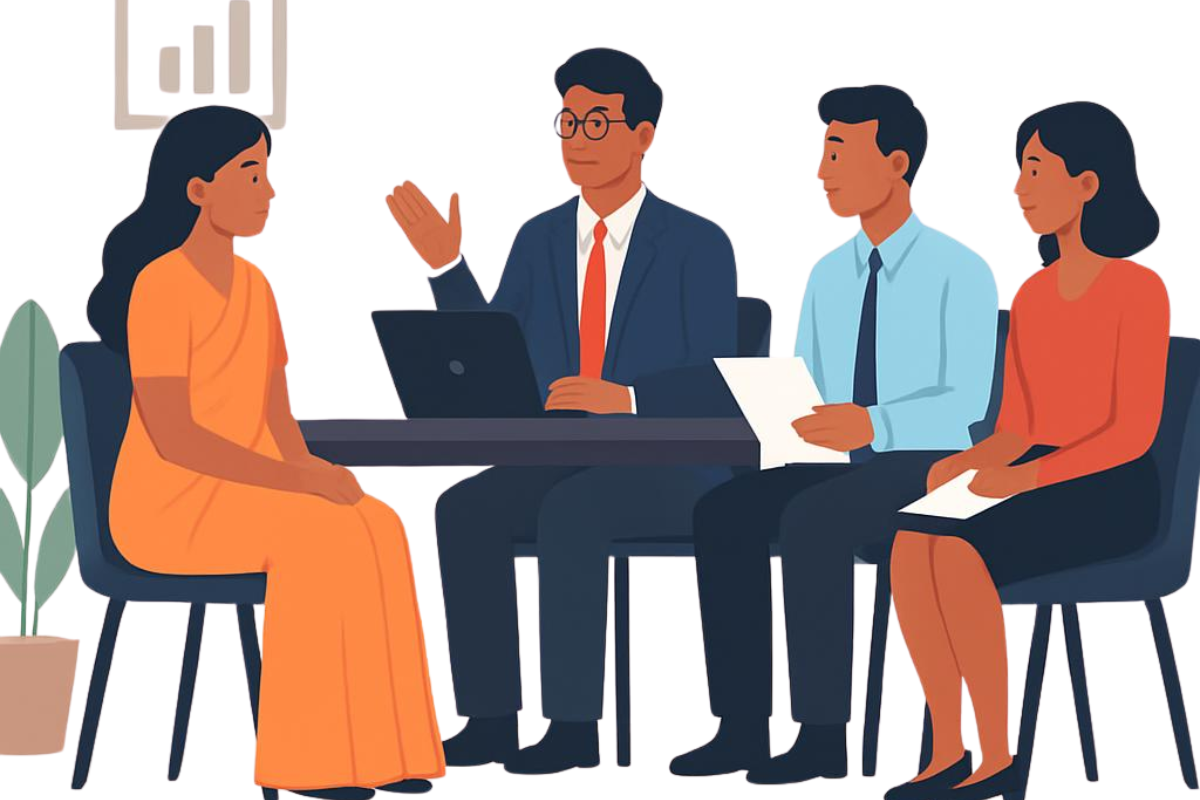
In this format, multiple interviewers (HR, technical heads, managers) evaluate you simultaneously.
What Employers Assess:
- Ability to handle pressure
- Communication with multiple stakeholders
- Depth of knowledge
- Confidence and composure
How to Prepare:
- Address all panel members, not just one
- Stay calm and composed
- Listen carefully before answering
- Don’t rush—take a moment to think
Challenge:
It can feel intimidating, but it’s a great opportunity to impress decision-makers at once.
5. Group Discussion (GD) Interview
Overview
Widely used in campus placements and entry-level hiring, GD rounds evaluate how candidates interact in a group.
What Employers Assess:
- Communication and leadership skills
- Teamwork and collaboration
- Critical thinking
- Ability to influence others
How to Perform Well:
- Speak clearly and confidently
- Don’t dominate or interrupt others
- Add value with relevant points
- Be a good listener
Winning Tip:
Quality matters more than quantity—make fewer but impactful contributions.
Key Trends in Job Interviews in India (2026)
- Hybrid hiring models (combining virtual + in-person rounds)
- Skill-based assessments alongside interviews
- AI-driven screening tools for initial shortlisting
- Increased focus on soft skills and cultural fit
Common Mistakes Candidates Make
- Not understanding the interview format
- Poor communication skills
- Lack of company research
- Overconfidence or underconfidence
- Ignoring body language (even in virtual interviews)
FAQs: Job Interviews in India
Which interview type is most common in India?
Face-to-face interviews are still widely used, but video interviews are rapidly becoming the norm.
How many interview rounds are typical?
Most companies conduct 2–4 rounds, including screening, technical, and HR interviews.
Are group discussions still relevant?
Yes, especially for freshers and campus placements.
How can I prepare for multiple interview types?
Practice mock interviews, improve communication skills, and adapt your preparation to each format.
What is the hardest type of interview?
Panel interviews are often considered the most challenging due to multiple evaluators.
Hospitality examples for each interview format
Phone screening: confirm shift availability and role requirements. In-person: describe a guest complaint you resolved. Panel: explain how you coordinate with housekeeping, front office or F&B. Practical: demonstrate safe food handling or an appropriate check-in task. Video: prepare a quiet setting and discuss actual job experience. Employers should choose assessments relevant to the role and make reasonable accommodations.
For role-specific preparation, review Front Office Executive duties, Commis Chef skills and the hospitality fresher career guide.
Preparing for a hotel walk-in recruitment event
Walk-in interviews involve practical preparation beyond understanding interview formats. Use the hotel walk-in interview checklist to verify the advertised event, prepare documents and practise department-specific questions.
Final Thoughts
Understanding the different types of job interviews in India gives you a competitive edge. Each format tests a unique set of skills, and mastering them can significantly improve your chances of landing the right job.
Preparation isn’t just about answering questions—it’s about adapting to the situation, communicating effectively, and presenting your best self in every format.