 HorecaHire

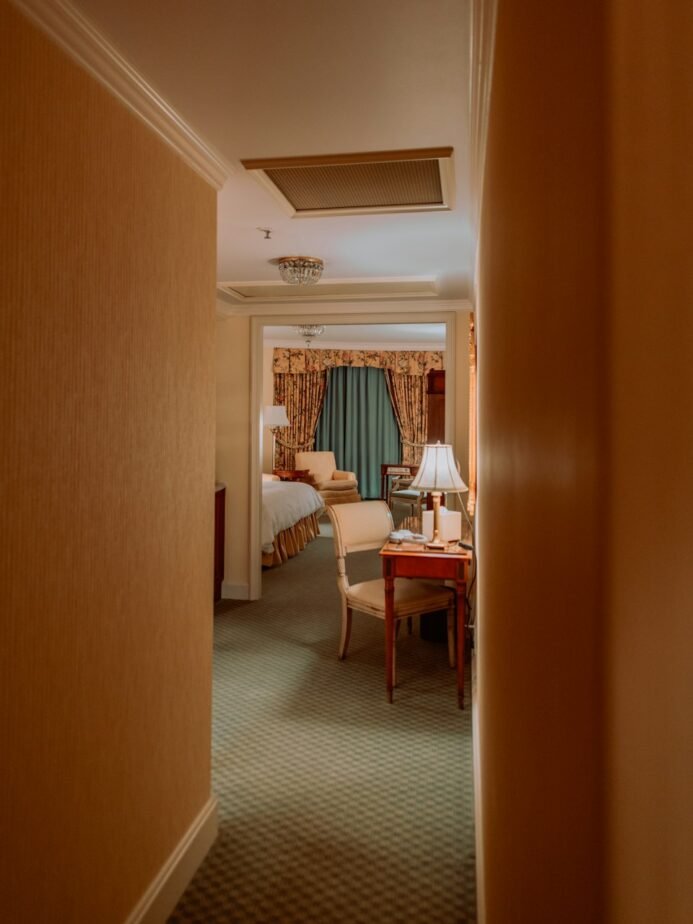
A hotel Do Not Disturb (DND) room SOP protects a guest’s reasonable privacy while ensuring genuine safety concerns reach appropriately trained staff. The sign on a room door does not authorize housekeeping to ignore every possible emergency, and it does not invite employees to enter merely because cleaning was scheduled. This original HoReCaHire DND room register and welfare escalation checklist helps Housekeeping, Front Office and Security handle occupied rooms, cleaning requests and legitimate welfare concerns consistently.
What DND means for housekeeping
A displayed Do Not Disturb request tells routine room-service employees not to interrupt the guest under the hotel’s stated policy. It is not proof that the guest is inside, asleep, safe, or refusing every communication forever. Front Office may have a legitimate booking or checkout issue, but any attempted contact or room entry needs a clear, authorized and proportionate procedure.
| Room situation | Normal response | What not to assume |
|---|---|---|
| DND with no danger indicated | Respect privacy and record actual service deferral | Guest is hiding a problem |
| Guest requests towels without entry | Use permitted handover or guest-preferred timing | DND must automatically cancel every request |
| Repeated DND over time | Supervisor reviews property policy and relevant facts | A universal legal time limit exists |
| Credible emergency warning | Activate trained safety/security response | Wait indefinitely because sign is displayed |
| Late departure or failed contact | Follow authorized duty-management procedure | Staff may automatically enter or disclose occupancy |
Ten-step hotel DND handling SOP
- Confirm the correct occupied-room status and actual service request in approved systems.
- Observe the DND sign or electronic privacy setting without touching guest belongings or opening the door.
- Do not knock or enter for routine cleaning when the property’s policy prohibits interruption.
- Record the genuine observation, shift and employee ID in a restricted housekeeping task record.
- Coordinate time-sensitive legitimate guest requests through the approved, minimally intrusive contact method.
- If housekeeping service is deferred, identify how fresh supplies or the next opportunity can be offered.
- Tell the supervisor about genuinely unusual duration, reported distress, water leaks or other safety information.
- Let only the properly authorized Duty Manager, Security or emergency personnel decide escalation/entry according to real procedures.
- Document actual decisions, guest communication and the people who were present if an exception occurred.
- Handover unresolved service and safety issues to a named shift owner rather than mark the room cleaned.
Copy-ready hotel DND room monitoring register
| Field | Record |
|---|---|
| Business date and room reference | [Restricted PMS/Housekeeping ID] |
| First observed DND time | [Actual observed shift time] |
| Occupied/arrival/departure context | [Approved relevant room status] |
| Housekeeping service due | [Real scheduled or requested work] |
| Guest communication preference | [Only an approved relevant request] |
| Further observation | [True follow-up time and specific fact] |
| Concern, if any | [Reported injury, leak, smoke or unanswered urgent need] |
| Escalation decision | [Authorized manager/security owner and timestamp] |
| Contact or entry outcome | [Actual result, no speculative labels] |
| Next shift owner | [Named follow-up and genuine status] |
DND guest communication scripts
| Situation | Respectful wording |
|---|---|
| Guest requests later service | “Of course. What time would you prefer us to check availability for service?” |
| Towels requested at the door | “We can arrange a handover in the manner you prefer under hotel procedure.” |
| Guest complains of repeated knocks | “I’m sorry for the interruption. I’ll review the privacy request with our housekeeping supervisor.” |
| Manager needs welfare confirmation | “Our Duty Manager would like to check that everything is all right. Is there a convenient, safe way to contact you?” |
| Room cannot be serviced | “Your privacy request has been respected. We can explain alternative service arrangements whenever you’re ready.” |
Example: room service and a deferral record
A fictional occupied room is listed for stayover cleaning at 11:00. The attendant observes an active DND sign and records the true deferral at 11:10. At 15:20, a guest asks for two fresh towels without cleaning. Housekeeping logs the authorized towel handover and leaves the cleaning task pending under actual policy. The guest’s valid request is not treated as permission to enter or as evidence that the room has been cleaned.
DND is not a fixed-time automatic entry permission
Some properties set internal contact escalation windows, but they vary and may change with guest welfare, occupancy, emergency risk and applicable laws. HoReCaHire does not recommend a universal “enter after X hours” rule. A manager must distinguish a routine housekeeping backlog from an objectively credible emergency, consult trained responders as needed and document proportionate authorized decisions.
Credible guest welfare concerns
| Observation | Safer escalation path |
|---|---|
| Guest calls reporting injury or serious illness | Appropriate urgent medical/emergency response |
| Smoke or alarm near room | Activate real fire/life-safety procedures |
| Water pouring into corridor | Protect guest and electrical safety; qualified emergency response |
| Reported threats/violence | Security/emergency authority as warranted; protect privacy |
| Unusually long DND with no other evidence | Supervisor fact review and authorized, proportionate welfare protocol |
| Employee simply needs to meet cleaning quota | No emergency basis for unapproved entry |
Who has authority to enter?
The hotel’s actual security and emergency policy must define qualified decision-makers, master-key custody, permitted witnesses, guest identity checks and documentation. Housekeeping personnel should not borrow a colleague’s key card or let a stranger claim to be a relative. For imminent danger, follow the appropriate real emergency procedure rather than a routine room-servicing script.
Supervisor’s shift-level DND review
- Review DND rooms with deferred housekeeping separately from cleaned/inspected inventory.
- Check genuine guest supply requests and expected checkouts for practical service coordination.
- Avoid disclosing room occupants or DND patterns to unauthorized callers.
- Assess any actual safety report independently of a housekeeping quota.
- Ensure any authorized welfare contact respects dignity and safeguards vulnerable guests.
- Record policy exceptions, response owner and objective evidence for later review.
- Train the next shift on what was done, not rumors about guest behavior.
Common DND policy mistakes
- Treating a door sign as permission to ignore a reported emergency.
- Opening an occupied room because an attendant wants to finish a target.
- Assuming every long DND situation indicates crime or personal crisis.
- Writing sensitive personal judgments about the guest into a broadly shared housekeeping sheet.
- Marking the room ‘clean’ while the guest refused service.
- Allowing a caller who knows the room number to override guest privacy.
- Forcing an employee to enter an unsafe room alone instead of involving authorized responders.
Hotel DND practical staff scenario
During an inspection, a trainee sees a DND sign and hears a guest loudly ask not to be disturbed. Moments later the same guest calls reception requesting towels. The correct action is to respect the room entry restriction, coordinate the agreed delivery, and record actual service and any open task. A different response is needed if emergency dispatch reports smoke or someone calls for urgent medical help: activate qualified emergency procedures immediately.
Training and auditing checklist
| Competence | Evidence |
|---|---|
| Privacy and consent | Doesn’t disturb routine DND service without authority |
| Correct room status | Keeps PMS and housekeeping status factual |
| Guest requests | Provides approved alternatives without entering uninvited |
| Safety escalation | Recognizes genuine urgency and alerts correct team |
| Documented exception | Records why contact/entry occurred and authorized owner |
Related HoReCaHire hotel operating guides
Compare Housekeeping Associate duties, Housekeeping Supervisor responsibilities, Duty Manager procedures, guest communication examples, hotel management accountability and hotel housekeeping recruitment.
Frequently asked questions
Does DND mean staff can never enter? No; genuine authorized exceptions may exist for emergencies or other lawful safety reasons. How long should a hotel wait? Follow the real approved property policy and case-specific risk rather than a universal time. Can housekeeping mark a DND room cleaned? Not without completing actual authorized work. Should staff share the guest’s DND status with a caller? No unauthorized occupancy or privacy disclosure.
Editorial methodology: Original HoReCaHire scenario-based SOP based on general hospitality privacy, guestroom access and safety principles. It is not a substitute for an actual hotel’s legal, security or emergency response manual. No compulsory DND entry interval is asserted.