 HorecaHire

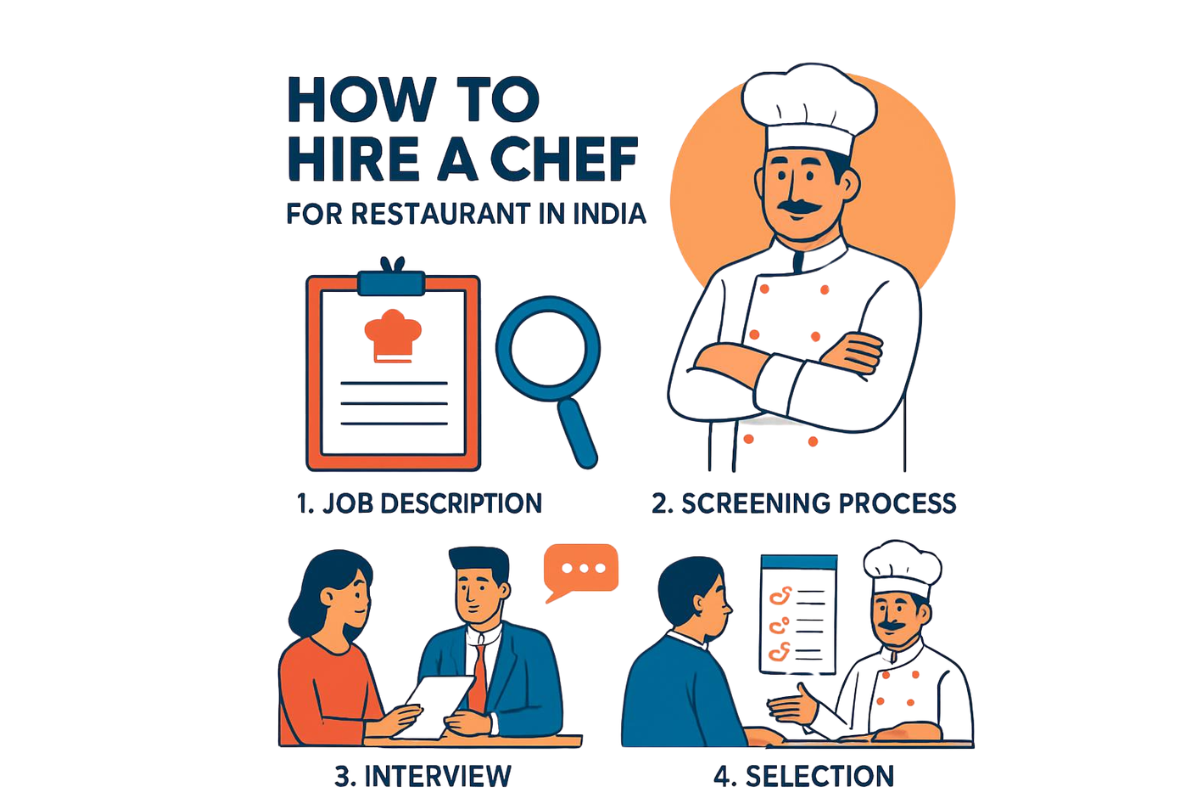
Hiring the right chef is one of the most important decisions for any restaurant in India. A good chef does much more than cook food. They control taste consistency, kitchen discipline, food cost, hygiene, menu quality, team performance, and customer satisfaction.
Whether you are opening a fine-dining restaurant, QSR outlet, cloud kitchen, café, hotel kitchen, momo outlet, bakery, or casual dining restaurant, the success of your food business depends heavily on the chef you hire.
In India’s competitive hospitality market, restaurants need chefs who understand taste, speed, hygiene, cost control, and customer expectations. This guide by Horeca Hire explains how to hire a chef for your restaurant in India step by step.
Why Hiring the Right Chef Matters
A chef directly affects your restaurant’s reputation and profitability. Customers may visit your restaurant for ambience, location, or offers, but they return mainly because of food quality.
The right chef can help you:
- Maintain consistent taste
- Reduce food wastage
- Improve kitchen operations
- Train junior kitchen staff
- Create profitable menus
- Follow hygiene and food safety standards
- Improve customer reviews
- Control ingredient cost
- Build a strong restaurant brand
A wrong chef, on the other hand, can create serious problems such as inconsistent food, high wastage, poor hygiene, staff conflict, slow service, and customer complaints.
Types of Chefs You Can Hire for a Restaurant in India
Before hiring, you must understand which type of chef your restaurant actually needs.
1. Executive Chef
An executive chef is usually hired by hotels, large restaurants, restaurant chains, and premium dining brands. They manage the entire kitchen operation, menu planning, food cost, vendor coordination, kitchen team, and quality control.
Best for: Hotels, fine dining restaurants, large restaurants, multi-outlet brands.
2. Head Chef
A head chef manages daily kitchen operations. They supervise cooks, maintain recipes, check food quality, and ensure smooth service.
Best for: Independent restaurants, cafés, casual dining outlets, QSR brands, cloud kitchens.
3. Sous Chef
A sous chef is the second-in-command in the kitchen. They support the head chef and manage operations when the head chef is unavailable.
Best for: Medium and large restaurants with high order volume.
4. Chef de Partie
A Chef de Partie handles a specific kitchen section such as tandoor, Chinese, continental, curry, bakery, grill, or pantry.
Best for: Restaurants with multiple cuisine sections.
5. Commis Chef
A commis chef is a junior chef who assists senior chefs with preparation, basic cooking, cleaning, and section support. A commis chef is generally considered an entry-level kitchen role.
Best for: Growing restaurants, hotel kitchens, cloud kitchens, cafés, and QSR outlets.
6. Specialty Chef
A specialty chef has expertise in one cuisine or product category, such as Indian, Chinese, South Indian, Mughlai, Tandoor, Bakery, Continental, Italian, Momos, Sushi, or Fast Food.
Best for: Cuisine-focused restaurants and brands.
Step-by-Step Process to Hire a Chef for Restaurant in India
1. Define Your Restaurant Concept Clearly
Before posting a chef job, define your restaurant concept. A chef suitable for a premium Indian restaurant may not be the right fit for a fast-moving QSR outlet.
Clarify these points:
- Type of restaurant
- Cuisine
- Average order volume
- Kitchen size
- Menu complexity
- Budget
- Service style
- Target customers
- Required speed of preparation
- Need for recipe development
For example, a cloud kitchen needs a chef who can work fast and maintain packaging-friendly food quality. A fine-dining restaurant needs a chef with plating skills, presentation sense, and menu creativity.
2. Create a Clear Chef Job Description
A clear job description helps you attract the right candidates and avoid unsuitable applications.
Your chef job description should include:
- Job title
- Restaurant name
- Location
- Cuisine type
- Experience required
- Key responsibilities
- Required skills
- Salary range
- Duty hours
- Weekly off policy
- Food and accommodation details, if available
- Trial or practical test requirement
- Joining timeline
Sample Chef Job Description
Job Title: Head Chef
Location: Delhi / Mumbai / Bengaluru / Pune / Hyderabad / Kolkata / Chennai
Experience: 5–8 years
Cuisine: Indian, Chinese, Continental, Tandoor, QSR, or Multi-cuisine
Responsibilities:
- Prepare and supervise food production
- Maintain taste and portion consistency
- Manage kitchen team and daily operations
- Control food wastage and kitchen cost
- Maintain hygiene and cleanliness
- Follow food safety standards
- Train junior chefs and kitchen helpers
- Coordinate with purchase and inventory teams
- Support menu development and recipe standardization
Requirements:
- Relevant restaurant or hotel experience
- Strong knowledge of cuisine
- Ability to manage kitchen pressure
- Knowledge of hygiene and food safety
- Team management skills
- Cost-control mindset
- Discipline and punctuality
3. Decide the Salary Budget
Chef salaries in India vary depending on city, restaurant type, cuisine, experience, and kitchen responsibility. Current salary data shows wide variation: some salary platforms report average head chef salaries around ₹29,000 per month, while others show higher ranges for experienced chefs and hotel chefs.
For premium hotels and high-end restaurants, published hospitality salary guides indicate that sous chefs, head chefs, and executive chefs can earn significantly higher monthly salaries, depending on experience and brand category.
Approximate Chef Salary Range in India
| Chef Role | Approximate Monthly Salary |
|---|---|
| Commis Chef | ₹12,000 – ₹25,000 |
| Cook / Line Chef | ₹18,000 – ₹35,000 |
| Chef de Partie | ₹25,000 – ₹45,000 |
| Sous Chef | ₹35,000 – ₹70,000 |
| Head Chef | ₹40,000 – ₹1,20,000 |
| Executive Chef | ₹1,00,000 – ₹4,00,000+ |
Note: Salary depends heavily on city, cuisine, brand reputation, work hours, accommodation, and chef experience.
4. Choose the Right Hiring Channel
Finding a chef through general job portals can be time-consuming because many candidates may not match hospitality-specific requirements. Restaurant hiring needs speed, verification, and practical skill matching.
You can hire chefs through:
- Hospitality recruitment platforms like Horeca Hire
- Chef hiring agencies
- Restaurant referrals
- Hotel management institutes
- Social media hiring groups
- Local hospitality networks
- Walk-in interviews
- Previous restaurant staff references
For faster and more reliable hiring, restaurant owners should use a hospitality-focused hiring platform that understands chef roles, cuisine categories, salary expectations, and kitchen operations.
5. Shortlist Candidates Based on Real Kitchen Experience
Do not shortlist only by years of experience. A chef’s actual kitchen exposure matters more.
Check the candidate’s:
- Previous restaurant type
- Cuisine expertise
- Kitchen volume handled
- Menu knowledge
- Team size managed
- Stability in previous jobs
- Reason for leaving
- Hygiene knowledge
- Food cost understanding
- Practical cooking ability
A chef who worked in a 200-cover restaurant may handle pressure better than someone with similar experience in a low-volume kitchen.
6. Conduct a Practical Cooking Trial
For chef hiring, a practical test is more important than a normal interview. Many candidates speak well, but the real skill is visible only inside the kitchen.
During the trial, test:
- Taste
- Texture
- Presentation
- Speed
- Hygiene
- Knife skills
- Portion control
- Ingredient handling
- Wastage control
- Ability to follow instructions
- Clean working habits
Sample Trial Tasks
For an Indian chef:
- Prepare one curry
- Prepare one dry starter
- Make basic gravy
- Show tandoor or curry section knowledge
For a Chinese chef:
- Prepare fried rice
- Prepare noodles
- Prepare Manchurian or chilli paneer/chicken
- Show wok handling
For a momo chef:
- Prepare dough
- Make filling
- Fold momos properly
- Steam without breaking
- Prepare chutney
- Maintain shape and consistency
For a continental chef:
- Prepare pasta
- Prepare sauce
- Prepare grilled item
- Plate a dish professionally
7. Ask the Right Interview Questions
Interview questions should test practical knowledge, attitude, discipline, and problem-solving ability.
Important Chef Interview Questions
- Which cuisines are you most confident in?
- What was your role in your previous kitchen?
- How many orders could your kitchen handle per day?
- How do you maintain taste consistency?
- How do you control food wastage?
- How do you handle customer complaints about food?
- How do you manage junior kitchen staff?
- What is your process for maintaining hygiene?
- How do you calculate portion size?
- Can you standardize recipes for a restaurant chain?
- How do you manage pressure during peak hours?
- Why did you leave your last job?
- Are you comfortable with written recipes and SOPs?
- Can you train helpers and commis chefs?
- How soon can you join?
8. Check Hygiene and Food Safety Knowledge
Food safety is critical for restaurants in India. FSSAI is India’s official food safety regulator, and food businesses use the FoSCoS platform for licensing and registration-related services.
A chef should know basic hygiene practices such as:
- Hand washing
- Clean uniform
- Hair covering
- Proper storage
- FIFO method
- Safe cooking temperature
- Cross-contamination prevention
- Cleaning and sanitization
- Pest-control awareness
- Raw and cooked food separation
A chef who ignores hygiene can damage your brand and create compliance risks.
9. Verify Previous Employment
Before finalizing the chef, verify their previous job history.
Check:
- Previous employer name
- Duration of employment
- Designation
- Behaviour
- Skill level
- Salary
- Reason for leaving
- Attendance record
- Discipline
- Any misconduct issues
Reference checks are very important because restaurants often face sudden chef resignations, salary disputes, or performance mismatch.
10. Offer a Proper Employment Letter
A written employment agreement helps avoid future confusion. Restaurant employment agreements usually define role, salary, working hours, leave policy, notice period, confidentiality, duties, and termination terms.
Your chef appointment letter should include:
- Name and designation
- Salary structure
- Joining date
- Duty hours
- Weekly off
- Leave policy
- Notice period
- Trial period
- Job responsibilities
- Confidentiality clause
- Recipe ownership clause
- Hygiene and discipline rules
- Accommodation and food benefits, if any
For restaurants, it is wise to clearly mention that recipes, SOPs, menu ideas, and kitchen processes developed for the restaurant belong to the business.
11. Set a Trial Period
Always keep a trial or probation period before confirming a chef permanently.
A trial period helps you evaluate:
- Food quality
- Kitchen discipline
- Behaviour with staff
- Punctuality
- Cost control
- Cleanliness
- Customer feedback
- Speed during rush hours
- Ability to follow SOPs
A 7-day practical trial or 30–90-day probation period is common in many restaurant hiring processes.
12. Standardize Recipes After Hiring
Once the chef joins, do not depend only on their personal memory or style. Create written recipe cards and SOPs.
Standardize:
- Ingredients
- Quantity
- Cooking time
- Portion size
- Plating
- Garnish
- Packaging
- Holding time
- Storage method
- Cost per portion
This protects your restaurant if the chef leaves and helps maintain consistency across shifts or outlets.
Common Mistakes Restaurant Owners Make While Hiring Chefs
Avoid these hiring mistakes:
- Hiring only because salary is low
- Not taking a cooking trial
- Not checking previous employment
- Not defining cuisine clearly
- Not discussing duty hours in advance
- Not offering written terms
- Depending fully on one chef
- Not documenting recipes
- Ignoring hygiene behaviour
- Hiring without checking attitude
- Not planning backup kitchen staff
A chef may be talented, but if they are undisciplined, unreliable, or unable to work with a team, they can create serious operational problems.
Qualities of a Good Restaurant Chef
A good chef should have:
- Strong cooking skills
- Consistent taste
- Clean working habits
- Speed and accuracy
- Team management ability
- Cost-control mindset
- Menu knowledge
- Calm behaviour under pressure
- Willingness to follow SOPs
- Understanding of customer preferences
- Respect for kitchen hierarchy
- Good communication with owners and managers
For Indian restaurants, adaptability is also very important because customer taste preferences vary by city, region, and cuisine.
Chef Hiring Checklist for Restaurant Owners
Use this checklist before final selection:
| Checklist Point | Status |
|---|---|
| Cuisine expertise checked | Yes / No |
| Practical trial completed | Yes / No |
| Taste approved | Yes / No |
| Speed checked | Yes / No |
| Hygiene checked | Yes / No |
| Previous job verified | Yes / No |
| Salary finalized | Yes / No |
| Duty hours discussed | Yes / No |
| Notice period discussed | Yes / No |
| Trial period agreed | Yes / No |
| Appointment letter prepared | Yes / No |
| Recipes to be documented | Yes / No |
How Horeca Hire Helps Restaurants Hire Chefs in India
Horeca Hire helps restaurants, hotels, cafés, cloud kitchens, QSR brands, bakeries, and food businesses hire skilled hospitality staff faster.
Through Horeca Hire, employers can find:
- Head chefs
- Sous chefs
- Commis chefs
- Indian chefs
- Chinese chefs
- Tandoor chefs
- Continental chefs
- Bakery chefs
- Fast food chefs
- Momo chefs
- Kitchen helpers
- Restaurant managers
- Waiters and service staff
Horeca Hire focuses on hospitality hiring, making it easier for restaurant owners to connect with relevant candidates instead of wasting time on unsuitable applications.
FAQs
How much does it cost to hire a chef in India?
Chef salaries in India can start from around ₹12,000–₹25,000 per month for junior chefs and can go above ₹1,00,000 per month for experienced head chefs or executive chefs. Salary depends on city, cuisine, experience, restaurant type, and responsibilities.
How do I hire a good chef for my restaurant?
To hire a good chef, define your cuisine, write a clear job description, shortlist based on relevant experience, conduct a practical cooking trial, check hygiene habits, verify previous employment, and offer written employment terms.
Should I hire a head chef or a cook?
If your restaurant needs menu development, kitchen management, team supervision, and cost control, hire a head chef. If your menu is already fixed and you only need food preparation, a cook or line chef may be enough.
Is a cooking trial necessary before hiring a chef?
Yes. A cooking trial is highly recommended because it helps you check taste, speed, hygiene, portion control, presentation, and real kitchen performance.
What documents should I take from a chef before hiring?
You can collect ID proof, address proof, previous employment details, salary details, bank details, experience certificate if available, and emergency contact information.
How can I retain a good chef?
Offer fair salary, respectful working conditions, weekly off, clear responsibilities, performance incentives, growth opportunities, and a professional kitchen environment.
Where can I hire chefs for restaurants in India?
You can hire chefs through hospitality recruitment platforms like Horeca Hire, restaurant referrals, hotel management institutes, hiring agencies, and local hospitality networks.
Sample practical chef-trial scorecard
For a supervised, paid practical trial, assess five areas using a consistent scoring sheet: food safety and hygiene (25 points), cooking technique and final dish quality (30), ingredient use and waste control (15), planning and timing (15), and communication and teamwork (15). These are illustrative weights, not an industry-mandated standard. Adapt the test to the actual role, inform every candidate of the criteria in advance, and keep tasting notes objective.
For matching responsibilities to seniority, compare our Commis Chef guide, Chef de Partie job description and Executive Chef job description. When ready, publish your chef vacancy on HorecaHire with an explicit pay range and duties.
Conclusion
Hiring a chef for a restaurant in India requires more than posting a vacancy and selecting the lowest-salary candidate. You need to understand your restaurant concept, define the chef role clearly, test practical skills, verify experience, check hygiene knowledge, and create proper employment terms.
A skilled chef can improve your food quality, reduce wastage, manage kitchen staff, build customer loyalty, and strengthen your restaurant brand. With the right hiring process and a hospitality-focused platform like Horeca Hire, restaurant owners can find reliable chefs faster and build stronger kitchen teams.