 HorecaHire


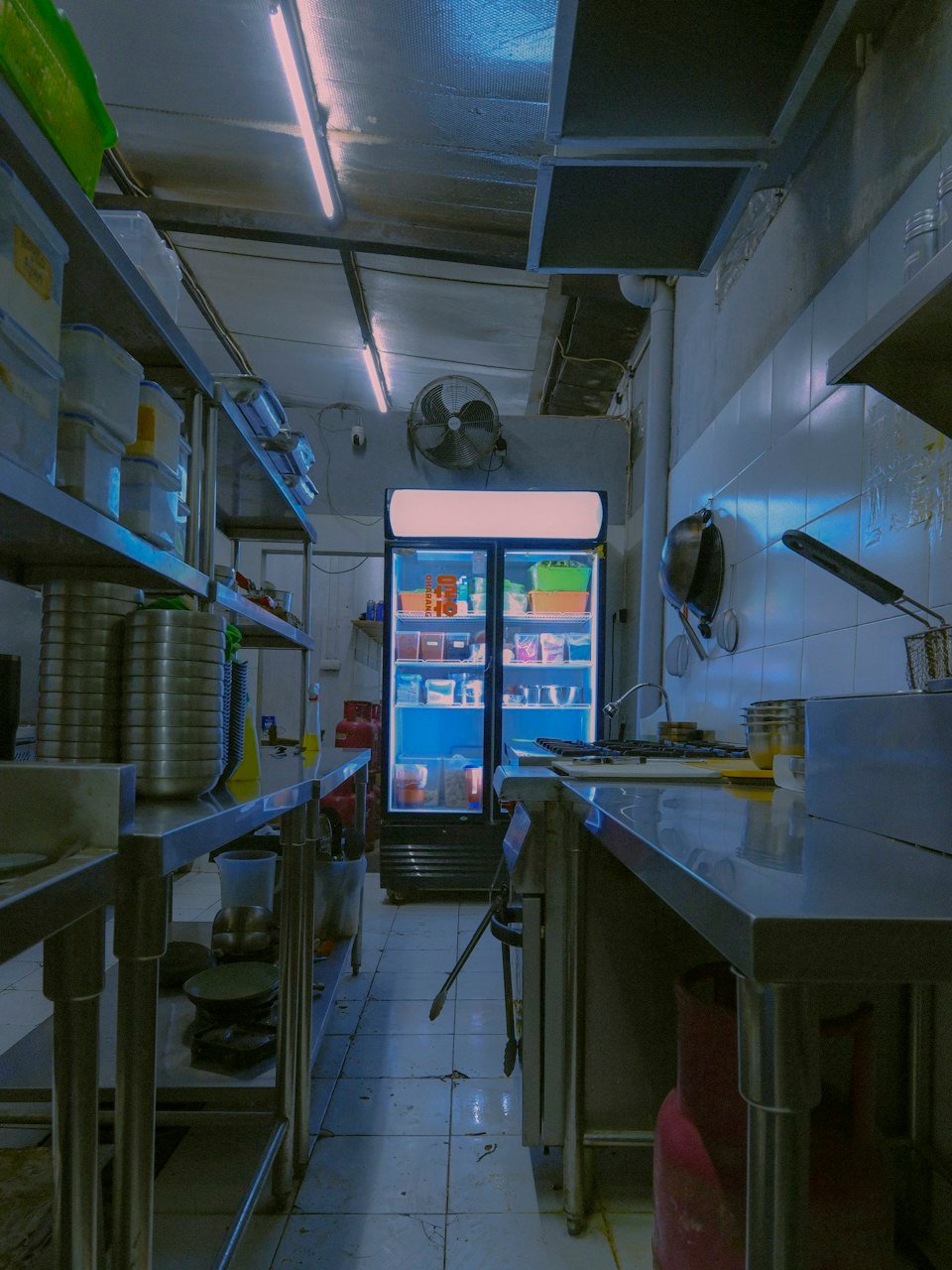
Restaurant equipment breakdown SOP refers to the immediate safe response when essential cooking, refrigeration, dishwasher, ventilation or POS-supporting equipment stops working during restaurant service. An equipment fault is not permission to bypass electrical protections or feed guests food that has become unsafe. This original HoReCaHire restaurant contingency guide gives an incident log, triage decision matrix, example revenue impact and a training exercise for managers.

Restaurant equipment breakdown SOP: first response
Stop affected use, protect employees and guests, notify the qualified kitchen/Engineering/Safety leads, and assess the food-safety consequences under the restaurant’s current validated system. Do not try to repair gas valves, exposed live electrical equipment or protected refrigeration machinery without appropriate qualification. Customer menu availability and orders should be updated truthfully when affected dishes cannot be safely prepared.
Five equipment failure categories
| Fault | Immediate decision | Qualified owner |
|---|---|---|
| Refrigerator or freezer fails | Assess temperature record, product condition and containment | Food-safety lead + Engineering |
| Commercial oven or gas appliance stops | Protect people and stop unsafe equipment use | Qualified technical/safety specialist |
| Dishwasher fails | Check ability to meet legitimate hygienic utensil process | Stewarding + food-safety manager |
| Ventilation or fire safeguard fault | Restrict affected hot production if necessary | Engineering and fire/safety authority |
| POS or KOT printer fails | Use authorized contingency tickets with order traceability | Manager and IT/POS owner |
FSSAI’s food storage training material instructs caterers to have agreed action for freezer breakdown/power failure rather than assume freezer contents stay safe indefinitely. U.S. FoodSafety.gov power outage guidance also illustrates that food-specific time/temperature exposures affect disposition. India’s actual regulatory and product-specific FSMS governs local operation; avoid copying foreign thresholds as automatic local legal rules.
Eight-step safe equipment contingency workflow
- Stop the machine/affected production through the authorized safe response.
- Make the hazard area inaccessible where electricity, gas, fire or unsafe food is suspected.
- Log equipment ID, time of failure, genuine symptoms and affected products.
- Alert qualified Engineering and the designated food-safety/shift supervisor.
- Assess available suitable backup equipment and whether its capacity actually meets safe demand.
- Amend menu availability and communicate legitimate guest delays or cancellation/refunds through the manager.
- Record specialist repairs, correct testing and food product disposition separately.
- Reopen the machine/production only after relevant qualified safety and food-service clearance.
Copy-ready equipment incident and restart register
| Field | Correct record |
|---|---|
| Date, kitchen section and asset ID | [Actual equipment location/model] |
| Failure observation and time | [Verified symptoms, not guessed cause] |
| Immediate protective action | [Affected equipment/food restricted] |
| Food inventory at risk | [Product batch, quantity, actual measurements] |
| Technician and qualified food-safety owner | [Named decision-makers] |
| Alternative safe service | [Actual approved backup setup] |
| Rejected/wasted items | [True quantity and disposition approval] |
| Technical repair/inspection | [Verified work order and clearance] |
| Resume time and manager review | [Only actual authorized signoff] |
Worked service-impact example
Imagine a fictional outlet loses one of two approved ovens before a 60-cover dinner. A supervisor had forecast 36 baked mains and that oven would have produced 18 approved portions per hour under the actual recipe. A one-hour loss may reduce planned capacity by 18 portions, but this doesn’t prove 18 refunds or a specific rupee loss: alternative menu demand, unaffected equipment and legitimate safe substitutions change outcomes. Explain only supported wait-time estimates to guests.
When to dispose, hold or transfer food
An outage creates a decision problem, not a universal permission to move all chilled stock. Determine actual recorded exposure, product type, safe alternate storage, cross-contamination and the restaurant’s qualified FSMS. Never taste a product to decide whether it remains safe. A food-safety lead may need to reject food even when the accounting waste target is missed. Record each actual disposition transparently.
Fifteen-minute restart meeting
| Minutes | Check |
|---|---|
| 0–3 | Failure root-cause evidence and technical status |
| 3–6 | Food safety, protected inventory and rejects |
| 6–9 | Verified alternative kitchen production capability |
| 9–12 | Guest orders, refunds and staffing coordination |
| 12–15 | Actual specialist clearance and named follow-up owner |
Common restaurant breakdown mistakes
- Telling kitchen stewards to bypass machine covers or open live equipment.
- Silently replacing a food item with an allergen-containing substitute.
- Leaving unsafe stored product in accepted kitchen inventory.
- Letting staff invent repair signoff on behalf of Engineering.
- Declaring food safe solely because it still feels cold.
- Promising guests an exact service time when safe production capacity is unknown.
- Resetting an incident record to make the end-of-shift checklist look complete.
Team-training scenarios
An ice machine stops and staff are unsure whether the remaining ice is suitable. The manager should not transfer unknown ice into drinks; involve the appropriate trained staff, verify an approved alternative and communicate menu restrictions. In another example, a card printer fails while POS remains functional. Use the real documented KOT fallback, preserve genuine order identifiers and reconcile any duplicated tickets before billing.
Related HoReCaHire kitchen resources
Read Executive Chef leadership, Restaurant Manager operations, Kitchen Steward duties, F&B Director oversight, Commis Chef role and restaurant recruitment.
Frequently asked questions
Who may restart equipment after a fault? The appropriate qualified and authorized team under the actual procedure. Is all refrigerated food safe during a power failure? No; trained product-specific assessment is necessary. Can operations substitute dishes silently? No, especially when allergens, confirmed menu contracts or guest consent are involved. Does restarting the machine clear food safety risk? Not automatically.
HoReCaHire editorial methodology: original breakdown matrix with FSSAI/FoSTaC and FoodSafety.gov background; local validated food safety controls and qualified technical professionals take precedence. All volumes and timing are fictional.