 HorecaHire

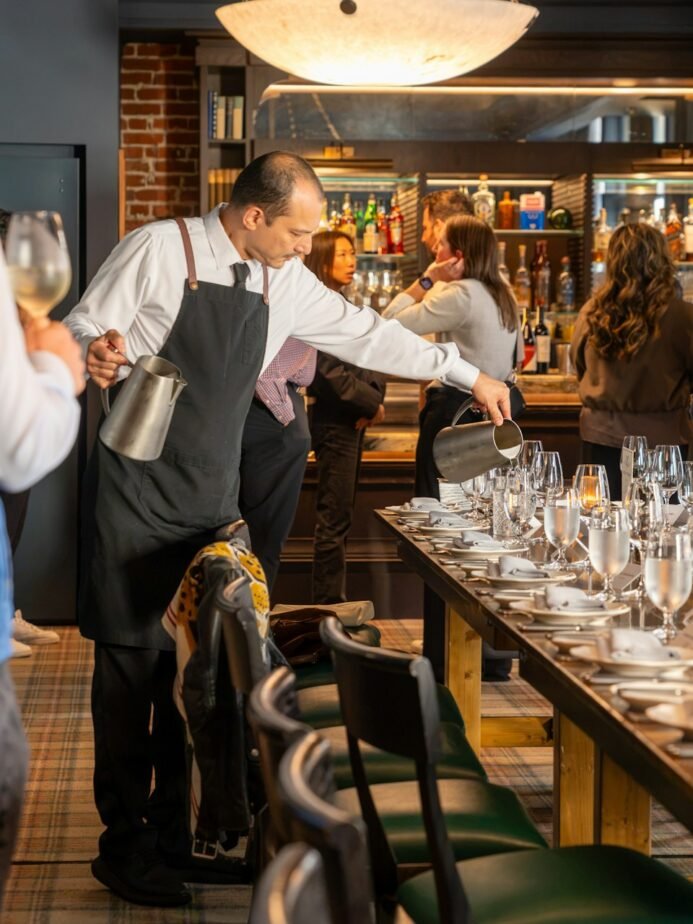
A Food and Beverage (F&B) Director leads the dining and beverage strategy and operating performance of a hotel, resort or hospitality group. The position often oversees several outlets, banquet or events catering and in-room dining rather than directly managing every restaurant shift. This guide provides a usable job description, hiring checklist and performance-review framework; the exact scope depends on the property.
Food and Beverage Director job description template
Title: Director of Food and Beverage. Location: [hotel/resort/city]. Reports to: [General Manager/Director of Operations]. Direct reports: [Restaurant Managers, Banquet Manager, Bar Manager and other actual leads]. Package: [verified salary, incentives and benefits].
Job summary: We are seeking an F&B Director to lead service standards, operating budgets, people development, purchasing oversight and guest experience across our food-and-beverage departments. The Director partners with the Executive Chef, finance and commercial teams to deliver safe, consistent and financially responsible operations.
Core responsibilities
- Strategy and planning: set realistic outlet objectives, service standards, trading plans and departmental budgets.
- Multi-outlet leadership: oversee restaurants, bars, banquets, room service or catering according to the property’s actual setup.
- Guest experience: establish service recovery procedures, examine complaint patterns and support complex guest resolutions.
- Food safety and service compliance: ensure documented practices, training, cleaning, allergen communication and escalation processes are implemented by responsible teams.
- Financial oversight: review revenue mix, food and beverage costs, waste, labour allocation, purchasing exceptions and margin performance.
- Supplier and inventory controls: work with procurement and chefs on reliable sourcing, specification compliance, stock accuracy and accountability.
- People development: recruit and coach departmental managers, plan succession, assess staffing risks and provide fair feedback.
- Cross-functional work: coordinate with events, sales, housekeeping, front office and finance for group functions and forecasts.
Food and Beverage Director vs F&B Manager vs Restaurant Manager
| Role | Typical scope | Main decisions |
|---|---|---|
| F&B Director | Property-wide or multi-outlet department | Strategy, budgets, leadership, standards and senior escalation |
| F&B Manager | Day-to-day F&B operation, sometimes across outlets | Shift coordination, departmental implementation and supervisor support |
| Restaurant Manager | One restaurant or outlet | Service, floor staffing, guest issues and outlet-level controls |
Job titles are not standardized across hotel chains. In a small property, one manager may cover all three scopes. Always assess the actual number of outlets, staff and decision rights described in the vacancy rather than interpreting title alone.
Qualifications and essential skills
Relevant experience leading teams in busy food-and-beverage settings is usually more important than a title alone. Employers may ask for hospitality education, multi-outlet experience, banquet exposure, financial literacy, POS or inventory-system familiarity, guest escalation skills and understanding of food safety. Avoid setting arbitrary degree or years-of-experience thresholds unless they are genuinely necessary for the role.
Weekly F&B Director review: sample agenda
- Performance: compare outlet revenue, covers or banquet demand against relevant budgets and operating periods.
- Cost control: examine food and beverage cost by outlet, purchase variances, shrinkage and documented wastage before making changes.
- Guest feedback: review recurring causes of dissatisfaction, their severity, action owners and follow-up status.
- People: check vacancies, training completion, manager turnover, rosters and workload risks.
- Safety: confirm unresolved food-safety, equipment and facility actions have appropriate escalation and accountability.
- Events: review upcoming banquets, dietary requirements, staffing and coordination with kitchen and sales.
Sample F&B performance scorecard
| Measure | How to use it | Caution |
|---|---|---|
| Revenue by outlet | Compare trends with covers and event volume | A strong event month is not necessarily a steady baseline |
| Food or beverage cost % | Cost of goods used divided by the relevant sales, multiplied by 100 | Check the reporting period and stock adjustments |
| Labour utilization | Review staffed hours against demand and service | Protect safety and lawful working conditions |
| Guest issue closure | Track material issues and follow-up | Don’t treat complaint count alone as service quality |
| Training readiness | Document observed competence and coaching | Completion of a module is not proof of mastery |
Illustrative calculation: if a restaurant’s verified food cost for a reporting period is ₹2,40,000 and food sales are ₹8,00,000, then food cost percentage = (2,40,000 ÷ 8,00,000) × 100 = 30%. This is a worked example, not an industry-wide benchmark or a guaranteed target.
How to interview a Food and Beverage Director
Ask: “Two outlets are growing revenue but margins are declining. How would you investigate?” Look for a structured review of inventory, purchase prices, menu mix, waste, discounts and labour rather than an immediate staff-cutting answer. Ask: “A banquet group reports an allergy-related concern. What is your escalation approach?” Look for guest safety, trained food-safety escalation and accurate documentation. Ask: “How would you prepare a new Restaurant Manager?” Look for coaching, clear standards and fair measurement.
A sample assessment weights operating leadership (25 points), commercial analysis (25), guest and safety judgment (20), people development (20), and cross-team coordination (10). Treat this as an adaptable hiring rubric, not an official hospitality certification.
Salary and hiring terms
Director compensation can vary widely by country, location, hotel size, event business and seniority. Do not use an unsupported “average salary” as an offer. Employers should publish the actual budgeted salary range, incentive conditions, reporting scope and expected shifts. Candidates should ask whether meals, accommodation, bonus and service-charge elements are contractual, discretionary or excluded.
Food-safety and training expectations
Hotels and food businesses operating in India should consult applicable FSSAI hygiene and sanitary requirements, including relevant Schedule 4 catering provisions. Food-safety systems and training should be appropriate to the establishment. A Director coordinates compliance with trained specialists and the food business operator; this article does not replace official requirements.
Related HoReCaHire job descriptions and hiring guides
For banquet sales and event profitability, review the banquet sales executive role, banquet sales manager responsibilities and banquet manager job description; use the banquet cancellation policy template when documenting refund and rescheduling terms.
Compare the Restaurant Manager job description, Executive Chef guide, Hotel General Manager responsibilities, and direct hotel hiring process. Employers can publish a hospitality vacancy.
Frequently asked questions
Does the Food and Beverage Director supervise the Executive Chef?
The organizational reporting relationship depends on hotel structure. Directors and Executive Chefs frequently collaborate closely on budgets, menus, cost and guest experience; neither reporting line should be assumed without checking the property chart.
Is this a restaurant-only role?
The title is more common when there are multiple food-and-beverage revenue streams, such as hotel restaurants, bars, functions or banquets. A standalone restaurant may use a Restaurant Manager or Operations Manager title.
Editorial note: This is a job-description and assessment framework, not an active vacancy, a salary survey, or a statement of universal hotel policy. Adapt it before use.
Cross-department event revenue handover example
Before an event is treated as confirmed, the F&B director should reconcile expected covers, contract terms, banquet staffing, approved menu costs, kitchen capacity, allergy instructions and collection responsibilities. Record changes in an agreed banquet event order; the restaurant team should not interpret a provisional sales enquiry as a guaranteed event.
Useful companion guides: hotel event sales coordinator and restaurant manager hiring checklist.